
Production Systems
Steam Heat Exchanger
A steam heat exchanger consists of a pressurized tank (usually 150 or 350 psi) that contains a set of process coils. The steam heat exchanger is considered to be the preferred unit for offshore use.
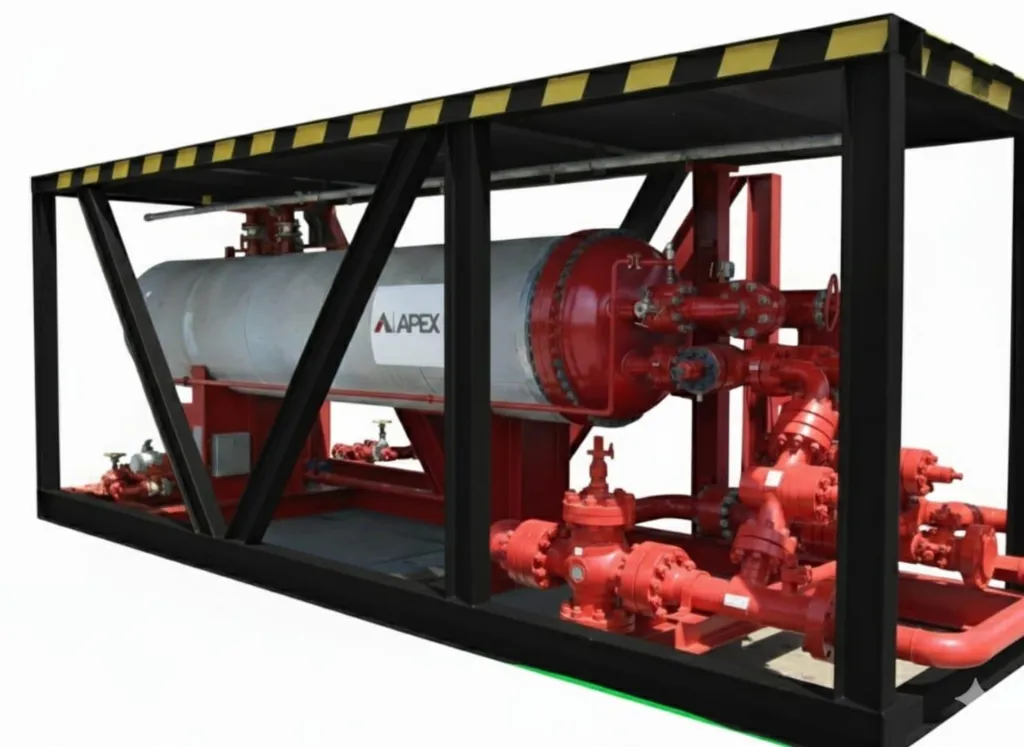
A steam heat exchanger consists of a pressurized tank (usually 150 or 350 psi) that contains a set of process coils. Steam is piped into the vessel from an external steam generator to heat the well effluent passing through the process coils.The steam heat exchanger is considered to be the preferred unit for offshore use. It is safer than indirect fired heaters because the flame source in the steam generator is not located in the well test area.Steam heat exchangers are available as multi-tube (small diameter multiple single pass tubes entering one end of the vessel and exiting the other), or multipass (single tube passing up and down the length of the vessel).Both are available as high or low pressure. The multi-tube is more efficient as the total surface area for heat transfer is greater. It also has a far smaller pressure drop due to the shorter tube length and larger number of tubes.
Steam heat exchangers are used to heat the well production after it flows out of the wellhead and prior to the separation process. The preheat coils heat the well effluent before it passes through a choke. The post-heat coils reheat the well effluent after it has passed through the choke.
Meets requirements of NACE MR0175.
Working temperature°F (°C) -20 to 350 (-29 to 177)
Other sizes, configurations, and pressure ratings are available to meet most applications.
These ratings are guidelines only. For more information, consult your local Apex Petroleum Services representative
Key features
- Automatic temperature control is an integral part of the design.
- Split-coil design, allows more efficient thermal conductivity and reduced pressure drop through the coil package.
- Bypass manifold helps reduce coil damage during cleanup.
- Modular design with box beam container which conforms to ISO specifications for improved portability.
- Meets applicable industry standards.
- Can be third-party certified.
- Prevents forming of hydrates.
- Improves separation of oil/water emulsions and foaming oils by reducing surface tension and viscosity.
- Dissolves paraffin and asphaltenes to prevent deposits from forming on the interior components of the separation equipment.
- Reduces viscosity of oil to improve burner efficiency.
Related products
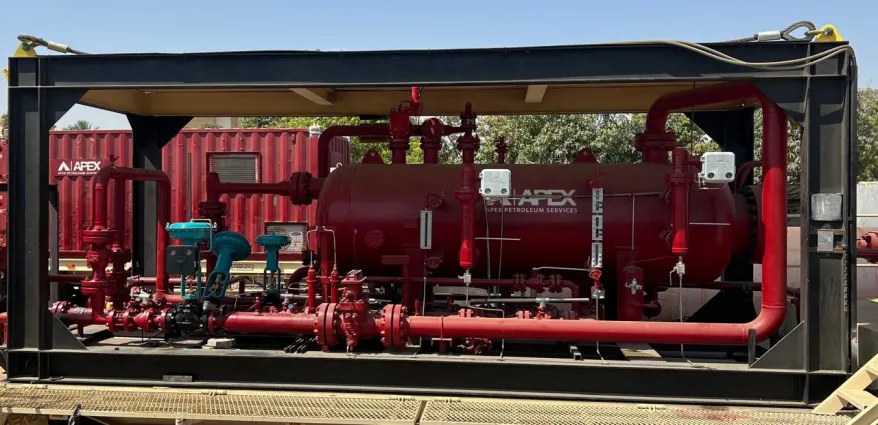
Horizontal Test Separator
The Apex Petroleum Services three-phase horizontal well testing separator is designed to separate and measure the gas, oil, and water produced from a well. This separator can be used in well testing and to clean up new completions or stimulated wells.
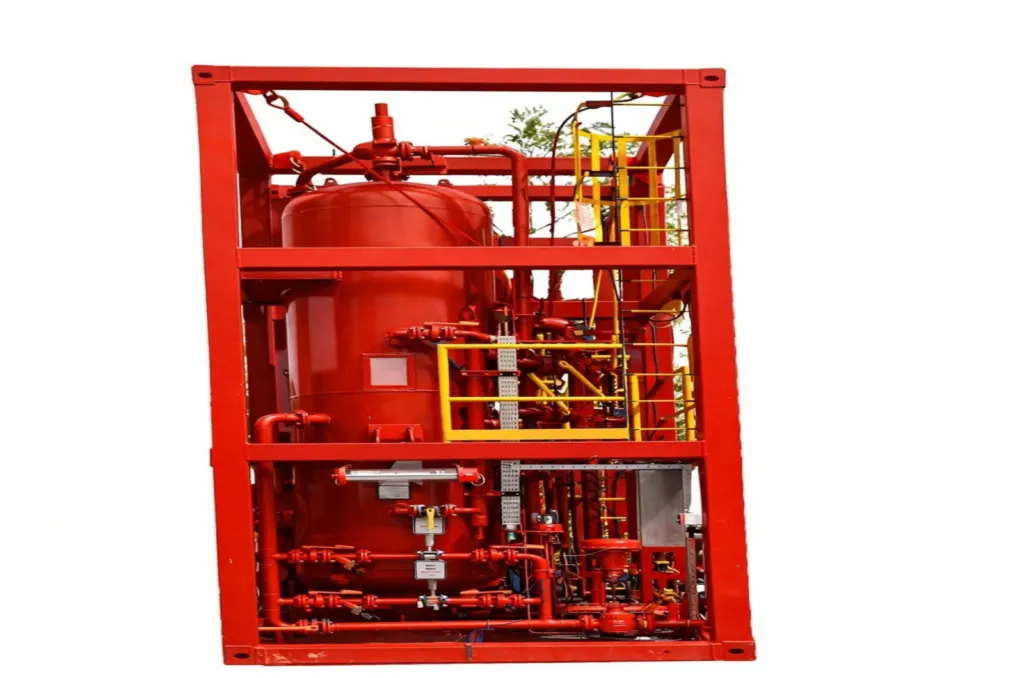
Vertical Separator
The Apex Vertical Separator is engineered for high-performance separation of liquids from produced gas, particularly suited for wells with low to moderate liquid content. Its compact and lightweight design makes it ideal for operations where space, mobility, and efficiency are key.
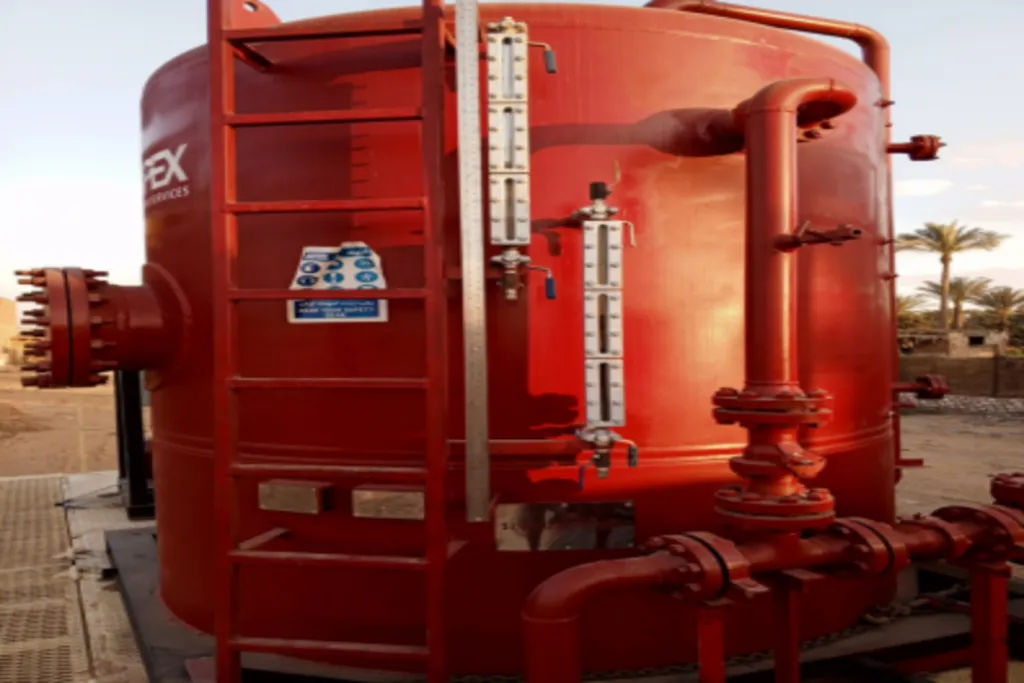
Surge Tank
The Apex Pressurized Test Tank is used to store produced liquids before they are disposed. It can also be used as an additional stage of separation.
Need this equipment on site?
Talk to our engineering team about specifications, availability, and deployment.