
Technology & Innovation
Flare Stack
Flare gas stacks, also known as flue gas stacks or exhaust stacks, are tall, cylindrical structures used to discharge waste gases from industrial processes into the atmosphere. In surface well testing, gas flaring is conducted by 40 ft, 60 ft, or 90 ft flare stacks.
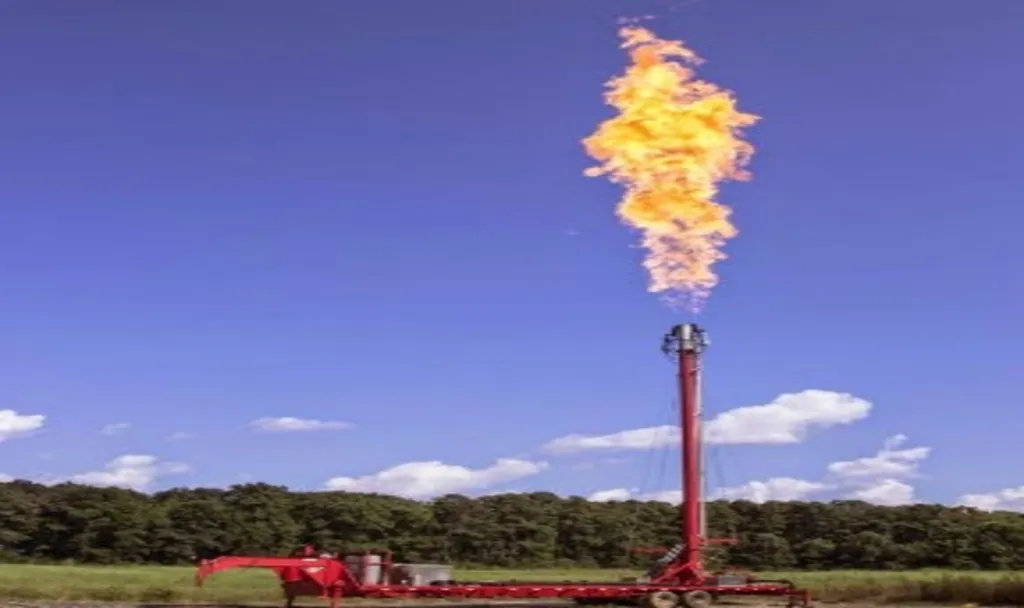
Flare gas stacks, also known as flue gas stacks or exhaust stacks, are tall, cylindrical structures used to discharge waste gases from industrial processes into the atmosphere. In surface well testing, gas flaring is conducted by 40 ft, 60 ft, or 90 ft flare stacks. Flare systems are available in 3”, 4”, 6” & 8” in diameter, which can be mobile and installed on a trailer. Trailer-mounted gas flares are very convenient to be mobilized, installed, and operated. Gas flaring systems consist of multiple pilot gas lines, automatic ignition system, flare tube, flare tip, and other components necessary for safe and reliable operation.
Applications:
Features and Benefits:
Other sizes, configurations, and pressure ratings are available to meet most applications. These ratings are guidelines only. For more information, consult your local Apex Petroleum Services representative.
Specifications
Scroll horizontally to view the complete table
| Specification | Size |
|---|---|
| Main Stack line | 8” 150#RF flange |
| Secondary stack line | 6” 150#RF flange |
| Auxiliary line | 2” 150#RF flange |
| Ignition gas supply line | 1” |
| Inlet connections | 6” 206 female |
| Flow Rate (max) | 30 to 50 MMscfd |
| Meets requirements of NACE MR0175. | |
| Working temperature (°F/°C) | -20 to 350 (-29 to 177) |
Related products
Piping
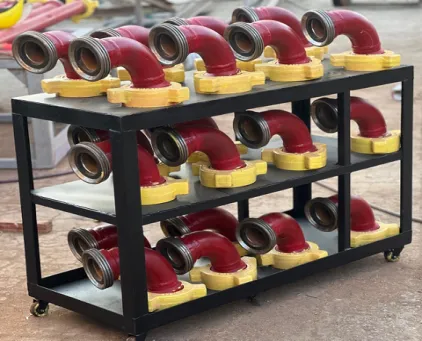
Piping systems transport well effluent to and between the well, and various process components of the well test package.
Apex Petroleum TMU
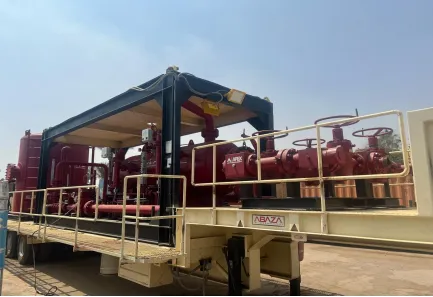
Apex Petroleum has designed a number of trailer-mounted packages for use on land. The trailers come equipped with the essentials needed for a well test operation, including the choke manifold, heater, separator, tank with associated metering, and pipework.
Need this equipment on site?
Talk to our engineering team about specifications, availability, and deployment.