
Technology & Innovation
Piping
Piping systems transport well effluent to and between the well, and various process components of the well test package.
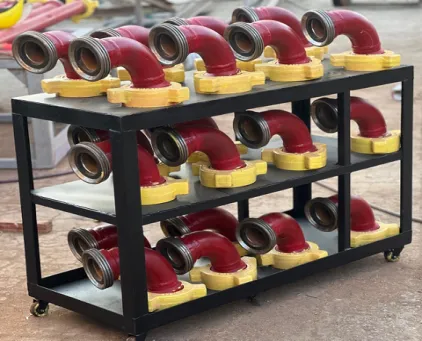
Piping systems transport well effluent to and between the well, and various process components of the well test package.
Typical components include:
The components are available in various sizes 2”, 3”, 4”, and 6”, and working pressures are normally 285 psi, 1,440 psi, 2,000 psi, 5,000 psi, 10,000 psi, and 15,000 psi.Other sizes and pressures are available.
Various types of sealing methods can be used dependent on pressure, temperature, fluid properties, and flow rates (e.g. ANSI flange, API flange, Hammer Union, Grayloc Hub).
The piping system must be rated to the maximum working pressure of the section of the well testing system to which it is connected.
Meets requirements of NACE MR0175.
Other sizes, configurations and pressure ratings are available to meet most applications.
These ratings are guidelines only. For more information contact your local Apex Petroleum Services representatie.
Key features
- Manufactured with materials to meet the requirements of NACE MR0175
- Designed and manufactured to comply with ASME B31.3 Category ‘M’ Service
- Built-in 1/16” corrosion allowance
- Color coded to identify service and pressure rating
- Individually serialized and traceable
Related products
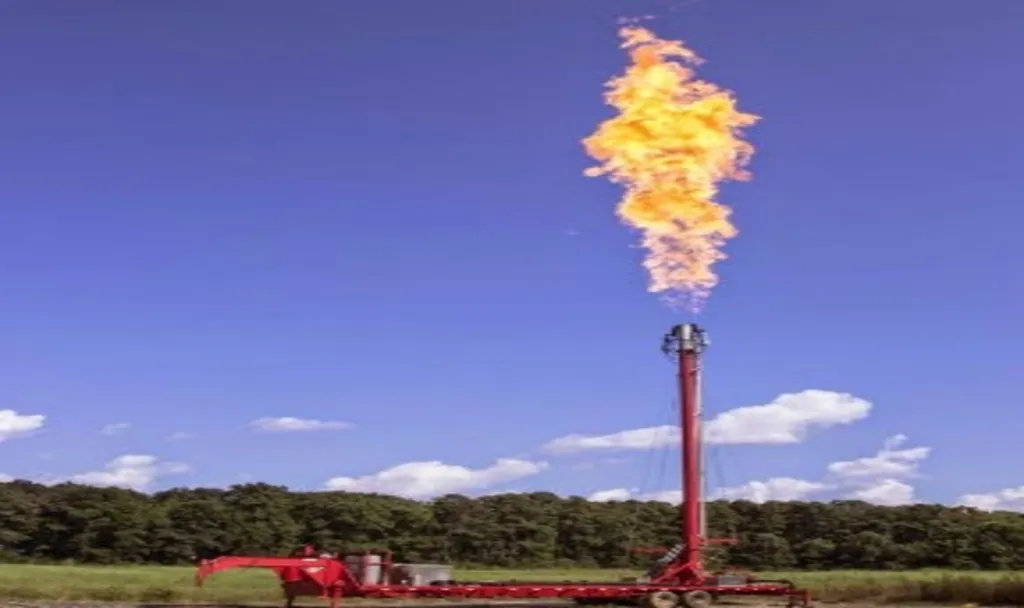
Flare Stack
Flare gas stacks, also known as flue gas stacks or exhaust stacks, are tall, cylindrical structures used to discharge waste gases from industrial processes into the atmosphere. In surface well testing, gas flaring is conducted by 40 ft, 60 ft, or 90 ft flare stacks.
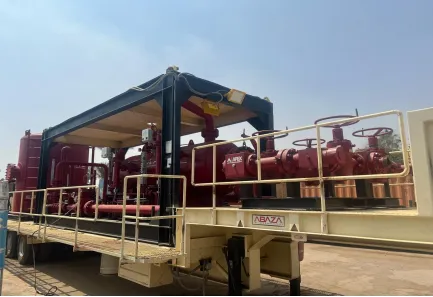
Apex Petroleum TMU
Apex Petroleum has designed a number of trailer-mounted packages for use on land. The trailers come equipped with the essentials needed for a well test operation, including the choke manifold, heater, separator, tank with associated metering, and pipework.
Need this equipment on site?
Talk to our engineering team about specifications, availability, and deployment.